

How Do You Know Clothes Are Good Quality Online?
Quick Summary
To judge quality clothes online, check the product listing for exact fabric content, fabric weight and care instructions, then inspect seams and finishing in the photos. Compare the measurements with a garment that already fits you, and confirm the store offers a clear return policy before you buy.
- Vague terms like premium feel usually hide weak fabric, so look for exact fiber percentages.
- Fabric weight in oz/yd² or gsm shows how a piece will wear and hold its shape.
- Measure a favourite garment flat and compare it with the store's size chart.
- Check whether the store offers 30-day returns and who pays return shipping.
Table of Contents
- Why Online Clothing Quality Is Hard to Judge
- Step 1: Check the Product Description and Care Label
- Step 2: Choose Fabrics That Last
- Step 3: Inspect Construction in Product Photos
- Step 4: Use an Online Clothing Size Guide Before You Buy
- Step 5: Check the Online Clothing Store Return Policy
- Booking Your First Quality-Checked Order at H&H Goods
- Frequently Asked Questions
Why Online Clothing Quality Is Hard to Judge
Shoppers often buy quality clothes online and discover poor quality only after the package arrives. Photos hide fabric weight, thin stitching and cheap finishing, and you cannot touch the garment. Knowing how to judge quality clothes online before you click "buy" saves money and frustration.
Quality shows up in a few places: the fabric, the construction, the fit and the store's policies. Each one leaves clues you can check from home. In this guide from H&H Goods, we walk through a simple process you can use on any store.
- Fabric content and weight tell you how a piece will wear.
- Seams and finishing show how long it will hold together.
- Size guides and returns decide whether the piece fits and can go back.
Step 1: Check the Product Description and Care Label
The product description is your first quality check. A detailed listing usually signals a seller who cares about the product. Vague wording like "premium feel" with no fabric details is a warning sign.
Look for these details in the listing:
- Exact fabric content, such as cotton, polyester or a blend
- Fabric weight, often given in ounces per square yard or grams per square metre
- Care instructions and whether the item is pre-shrunk
- Measurements for each size, not just S, M or L
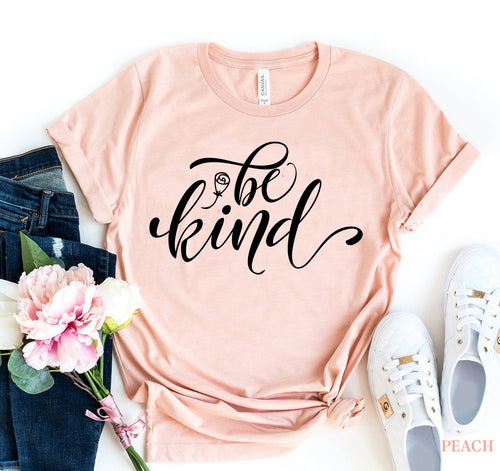
Our Be Kind T-shirt lists its fabric and its size chart in full. The listing says it is made of ring spun cotton and uses a soft textile print. Measurements for each size run from XS to 3XL, so you can compare them with a piece you already own.
Watch out: If a seller will not list fabric content, treat that as a reason to look elsewhere.
Use this quick checklist to see what a strong product listing should include before you buy.
| Listing detail | What to look for | Why it matters |
|---|---|---|
| Fabric content | Exact percentages, such as cotton or polyester | Vague terms like "premium feel" hide quality |
| Fabric weight | Listed in oz/yd² or gsm | Shows how the piece will wear |
| Care instructions | Wash guidance and pre-shrink status | Affects shrinkage and fading over time |
| Size measurements | Measurements for each size, not just S, M or L | Lets you compare with a piece you own |
Step 2: Choose Fabrics That Last
Fabric decides how a garment ages, and the listing gives you enough to judge it before checkout. Read fiber content, weave, weight, and care together, because each one changes how a piece breathes, pills, shrinks, and holds its shape.
Fiber content sets the baseline. Natural fibers such as cotton, wool, linen, and silk breathe well and feel good against skin, but they can shrink, wrinkle, or lose shape if the fabric is loosely made. Learn which low-quality fabrics to avoid in fast fashion.
Weave and knit change performance. A tight knit on a cotton top resists stretching out at the neck and hem. A loose, open knit breathes more but snags and loses shape faster.
Weight tells you how a fabric behaves. Fabric weight is usually listed in ounces per square yard (oz/yd²) or grams per square metre (gsm). A lightweight cotton jersey around 4-5 oz/yd² suits summer tops but shows wear sooner.
Pilling, shrinkage, and care are linked. Short-staple cotton and loose synthetic blends pill more; ring-spun cotton and air-jet spun yarn reduce it. Pre-shrunk and garment-washed fabrics shrink less, but any cotton can still move a little after the first wash.
Match the fabric to the job. For everyday tops, look for a tight-knit cotton or a cotton-poly blend with a small amount of spandex for stretch that recovers.
A quick fabric check before you buy:
- Read the exact fiber percentages, not just the fiber names.
- Note the weight in oz/yd² or gsm and compare it with a similar piece you own.
- Check whether the fabric is pre-shrunk or garment-washed.
- Read the care label for heat, drying, and dry-cleaning needs.
- Scan reviews for pilling, shrinkage, and fading comments on that specific fabric.
Watch out: A listing that says "premium cotton" or "soft blend" without percentages, weight, or care details is hiding the information you need to judge how the piece will wear.
Step 3: Inspect Construction in Product Photos
Product photos show more than color, but most shoppers do not know what to look for. Use a simple scoring pass so construction judgments are repeatable instead of a gut feeling. Rate each listing from 1 to 5 on the four checks below, then compare scores across the pieces you are considering.
Seams, Stitching, and Finishing
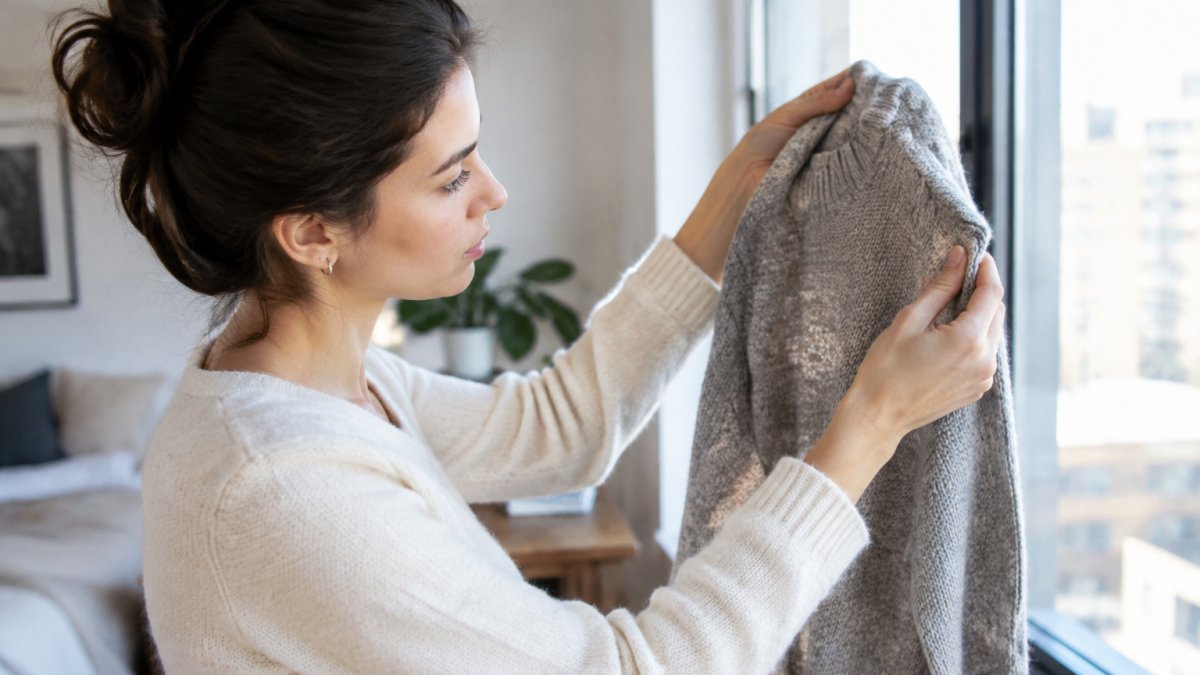
Strong seams and neat stitching signal a well-made piece. See how a quality-focused shopper's guide evaluates tops for a concrete example. Zoom in on the collar, shoulders, sleeves, side seams, and hem. Double-needle stitching is a construction detail to look for, since it is more durable through repeated washing. Look for seams that lie flat without puckering, hems that are even, and prints that sit straight on the grain.
Check the finishing too. Loose threads, skipped stitches, uneven hems, and crooked prints are early signs of poor quality. A collar that puckers or a print that looks cracked in the photo is worth a second look. If the listing shows only one angle or hides the inside of the garment, you cannot score construction fairly.
A Repeatable Quality-Scoring Checklist
Score each listing 1 (poor) to 5 (excellent) on these four dimensions before checkout:
- Fabric: Are fiber percentages, weight, and care given? Does the fabric suit the intended use?
- Construction: Are seams, stitching, hems, and finishing visible and neat? Are stress points reinforced?
- Fit evidence: Are garment measurements listed per size, and do photos show the item on different body types?
- Durability signals: Do reviews mention pilling, shrinkage, fading, or seam failure, and does the care label support long wear?
Add the four scores for a total out of 20. A piece scoring below 12 is a gamble; 12-15 is acceptable if the price and return terms are good; 16 or higher is a strong candidate. The score is not a guarantee, but it forces you to compare listings on the same criteria instead of reacting to the best photo.
Reading Buyer Photos and Reviews Critically
Buyer photos and reviews show how clothes look on real bodies and after wear. Read for comments on shrinkage, pilling, fading, seam failure, and fit, and treat repeated comments about the same problem as a pattern rather than a one-off. Look at buyer photos in natural light: do seams lie flat, does the fabric look opaque, and does the garment hold its shape? Customer photos are often more honest than studio shots, but they can also be flattering or poorly lit, so weigh them against the listing details.
Watch out: A listing with beautiful studio photos but no garment measurements, no fabric weight, and no buyer photos is giving you style cues, not quality evidence, score it low on fit evidence and durability even if the images look premium.
Step 4: Use an Online Clothing Size Guide Before You Buy
Sizes vary between brands, so a size M in one store may fit like a size S in another. Use the size guide and compare the measurements with a garment you already own that fits well.
Measure the garment, not just your body. Lay a favourite top flat and measure the chest width and length to compare with the chart. Lay a favourite top flat and measure the chest width and length. Then compare those numbers with the store's chart. Pay attention to sleeve length and body length too.
The Be Kind T-shirt lists body width and length for every size, from XS at 16½ inches wide to 3XL at 28 inches wide. Measuring a similar shirt against those numbers is more reliable than guessing your size.
Keep these tips in mind:
- Measure at the widest point of the chest, not the bust line.
- Check whether the chart measures the garment flat or the body.
- If you sit between sizes, read reviews that mention fit.
Step 5: Check the Online Clothing Store Return Policy
Even careful shoppers sometimes get the wrong size or a disappointing piece. A clear return policy protects you when that happens. Look for the return window, who pays for return shipping and whether you get a refund or only store credit.
H&H Goods offers hassle-free 30-day returns, so you have time to try on a piece and decide. Read the full terms before ordering so you know the steps to follow.
Before you buy, confirm three things:
- How many days you have to return the item
- Whether return shipping is free or paid by you
- Whether you receive a refund to your original payment method
Booking Your First Quality-Checked Order at H&H Goods
Quality shopping takes a few minutes of checking, but it pays off in clothes that fit and last. Use the steps above on every new store: read the description, judge the fabric, inspect the photos, match the size chart and confirm the returns.
If you want to start with pieces that pass these checks, browse the H&H Goods collection and compare the listings yourself. Quick delivery gets your order to you fast, and the 30-day return window gives you room to decide. View Collection 👉🏻
Frequently Asked Questions
How can you tell if clothes are good quality when shopping online?
Start with the fabric content, construction details and care label in the product description, since these are the most reliable indicators. Look for natural or blended fibres with clear percentages, mentions of double-needle stitching or reinforced seams, and fabric weight where it is listed. Then check product photos for close-ups of hems, cuffs and buttons. Finally, read recent buyer photos, which show how the garment looks after real wear rather than under studio lighting.
What should you look for in a clothing product description?
A useful description names the exact fabric composition, such as 50% cotton and 50% polyester, and gives details like fabric weight, whether the garment is pre-shrunk, and how the collar or hem is finished. Vague wording like premium feel with no fibre content is a warning sign. Care instructions matter too, because they tell you how much effort the garment will need to keep its shape and colour over time.
How can you choose the right clothing size when shopping online?
Measure a piece you already own that fits well, laying it flat and recording chest or body width and length. Compare those numbers with the store's size chart, which should list body measurements in centimetres or inches for each size. If you fall between sizes, check whether reviews mention running small or large, and choose based on the measurement that matters most for the garment, such as chest for tops or waist for bottoms.
What should you check in a store's return policy before ordering clothes?
Confirm the return window, which at H&H Goods is 30 days, and whether the store covers return shipping or exchanges. Check whether items must be unworn with tags attached, and how refunds are issued. Store-specific terms matter because they determine whether a poor fit is a simple exchange or a costly loss. Keep the original packaging and your order confirmation until you are sure the item works for you.
