

How to Avoid Low Quality Fast Fashion Fabrics
Last Updated: October 30, 2026
Quick Summary
Avoid low quality fabrics by testing garments before you buy: check weight, stretch and recovery, light transparency, seams, and pilling. Then compare cost-per-wear, since a higher price can cost less per wear.
- Divide the price by the number of times you expect to wear the piece to get cost-per-wear.
- Hold the fabric and check weight, stretch, and whether it springs back within a few seconds.
- Hold fabric up to light; if you can read the label through two layers, the weave is loose.
- Check inside seams for small, even stitches that lie flat, and rub the fabric ten times to test pilling.
Table of Contents
- How to Tell If Clothes Are Good Quality Before You Buy
- How to Read Clothing Labels Beyond Fiber Content
- The Best Fabrics for Durable Clothing and the Synthetics to Watch
- Building a Wardrobe You Can Check Before You Buy
- Frequently Asked Questions
Fast fashion is cheap to buy, but not always cheap to own. Browse the Beige Cozy Winter Pullover to see how a well-constructed knit piece is put together. Fast fashion is reported to be responsible for 10% of global CO2 emissions, and the wider fashion industry is described as producing 92 million tonnes of waste a year, a figure projected to reach 134 million tonnes by 2030 (Earth.org's analysis of fast fashion's environmental impact; UniformMarket's environmental impact statistics).

The answer is calculable: divide the price by the number of times you expect to wear the piece. A $20 top worn twice costs $10 per wear; a $35 top worn fifty times costs 70 cents per wear. This is cost-per-wear, one of the most useful tools for judging clothing quality.
- Cheap items often lose shape, pill, or fall apart after a few washes.
- Well-made items cost more up front but stay in rotation for years.
- Cost-per-wear shows which purchase actually saves money.
How to Tell If Clothes Are Good Quality Before You Buy
You can usually tell a lot about quality before you pay by looking at the fabric, weight, and construction.
Start with the feel. A garment that feels thin and flimsy almost always wears out faster.
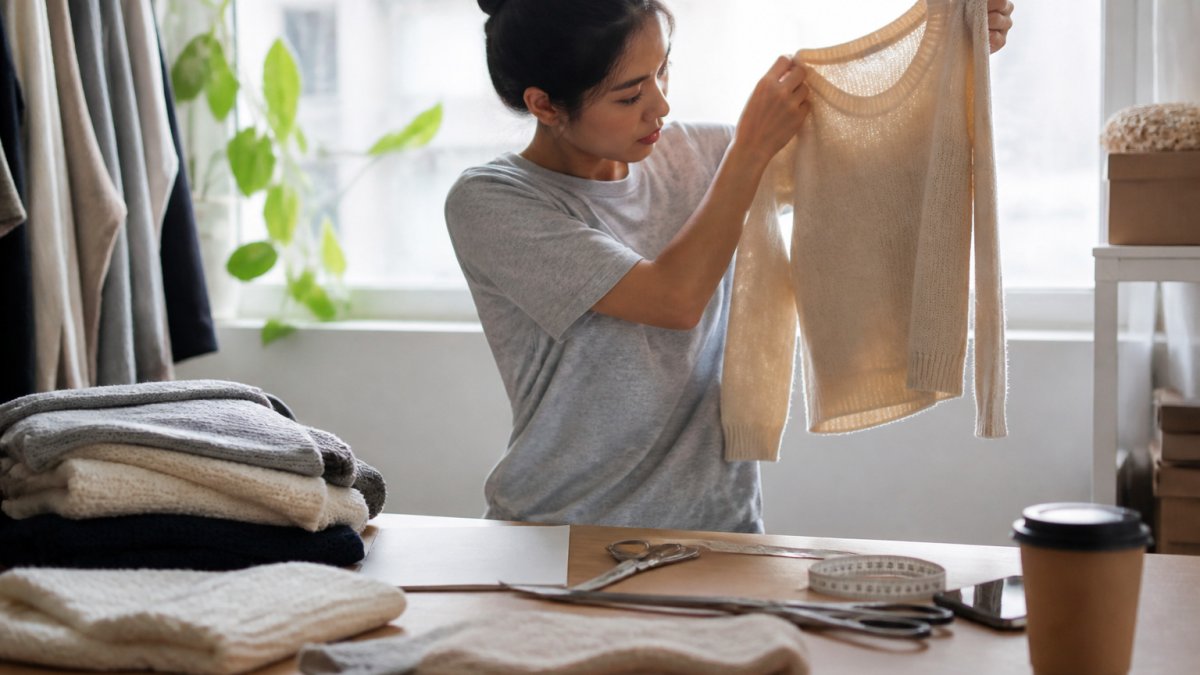
The In-Hand Test: Weight, Stretch and Recovery
Hold the garment and check three things:
- Weight: Heavier fabric usually means more fiber and better durability. Of two similar tops on the same rack, the heavier one generally has a tighter weave or higher fiber density.
- Stretch: Pull the fabric gently across the grain. It should spring back within a second or two.
- Recovery: Hold the stretched section for five seconds, release, and watch whether it returns fully. Slow or partial recovery signals sagging.
Knitwear and jersey tops are especially important to test this way. A sweater that stretches and does not bounce back will lose its shape within a few wears.
The Transparency and Weave-Density Check
Hold the fabric up to overhead light or a window. A quality woven shirt or tee should block most light; if you can read the label through two layers, the weave is loose and the fabric will likely pill, snag, and distort.
Run a thumbnail lightly across the surface. A tight weave resists; a loose one lifts fibers immediately. On denim and canvas, tight, uniform twill lines indicate denser yarn and better abrasion resistance.
The Burn Test (For Unlabeled or Thrifted Pieces)
You cannot burn a garment in a store, but you can use the burn test on a loose fiber, a seam allowance, or a thrifted item you already own.
- Cotton and linen burn like paper: fast, with a yellow flame, gray ash, and a smell of burning leaves. Ash crushes easily.
- Wool burns slowly, smells like burning hair, and leaves a crushable black ash.
- Polyester and other synthetics melt and shrink away from the flame, smell chemical, and leave a hard, plastic bead that will not crush.
Use a small snip from an inside seam, hold it with tweezers over a metal sink, and keep a glass of water nearby. The result tells you what the fiber is; the in-hand tests tell you how well it was made.
Checking Seams, Stitching and Pilling
Turn the item inside out and look at the seams first. Small, even stitches that lie flat are a good sign; loose threads, puckered seams, or gaps suggest rushed production.
Pilling is the small balls of fiber that form on fabric surfaces. Some is normal, but heavy pilling on new clothes points to weak fibers.
Watch out: A quick glance at the outside can hide poor construction. Always check the inside seams before you buy.
How to Read Clothing Labels Beyond Fiber Content
Fiber content is only part of the story: it tells you what the fabric is made of, not how well it was made. Most guides stop at "check the percentages." The deeper read is what the rest of the label, certifications, origin claims, care symbols, and blend ratios, tells you about the mill, the factory, and the likely lifespan of the piece.
Look for these details on the label and tag:
- Fiber blend: Note the percentages. A 60/40 cotton-polyester blend pills differently than a 95/5 blend; small synthetic percentages are often added for stretch or wrinkle resistance, while high synthetic percentages in a "cotton" tee usually signal cost-cutting.
- Care instructions: "Dry clean only" on a casual piece can signal a higher-quality fabric, but it raises upkeep costs. A garment that requires flat drying or cold hand-washing will only last if you actually follow through.
- Country of origin: This alone does not guarantee quality, but it helps you research the brand's production practices. "Made in" reflects where final assembly happened, not where the fabric was woven, the fabric origin is the stronger quality signal when disclosed.
What Certifications Actually Signal
Certifications are the closest thing a label has to a quality-control audit trail. They do not guarantee durability, but they indicate that a third party has checked a specific claim.
- OEKO-TEX Standard 100 means the finished article has been tested for harmful substances. It says nothing about durability, but it indicates the mill participates in testing regimes that low-cost, unregulated supply chains often skip.
- GOTS (Global Organic Textile Standard) covers organic fiber content plus environmental and social criteria across processing. A GOTS label implies traceability from fiber to finished garment, which usually correlates with tighter production control.
- GRS (Global Recycled Standard) verifies recycled content and chain of custody. Useful for judging whether a "recycled polyester" claim is substantive or marketing.
A garment with a credible certification and a clear fiber blend is a safer bet than one with a vague "eco" or "sustainable" tagline and no standard named. If a brand claims sustainability without naming a certification, treat the claim as marketing until proven otherwise.
Decoding Care Symbols and Blend Ratios
The care label is a durability forecast.
Blend ratios are the other underread signal. A small elastane percentage (2-5%) adds stretch and recovery; a high polyester percentage in a "cotton" item usually means the brand is trading breathability and biodegradability for cost.
Read the care label before you buy, not after. Pieces that need gentle washing or flat drying may not fit your routine, which affects how long they last.
The Best Fabrics for Durable Clothing and the Synthetics to Watch
Natural and well-chosen blended fabrics tend to last longer than low quality fabrics. Cotton, wool, and linen are strong natural choices, often chosen for breathability and durability.
Synthetic fabrics are not automatically bad.
Here is a quick guide to common fabrics:
| Fabric | Durability | Watch For |
|---|---|---|
| Cotton | Strong when tightly woven | Shrinkage, fading |
| Wool | Long-lasting with care | Moth damage, felting |
| Linen | Very durable | Wrinkling |
| Corduroy (cotton) | Sturdy, hard-wearing | Wales wearing thin at the knees |
| Cheap polyester blends | Varies widely | Pilling, heat damage |
For a practical example, the Men's Trendy Corduroy Pants at $36.95 are made from corduroy material and designed for spring and autumn wear.

Building a Wardrobe You Can Check Before You Buy
Start with a few pieces you know well, then add slowly. A small, high-quality wardrobe is easier to maintain than a large closet of weak pieces.
Use this checklist before every purchase:
- Does the fabric feel substantial in hand?
- Does it stretch and recover?
- Are the seams flat and even inside?
For basics, the Be Kind T-shirt at $35.00 is made from premium ring spun cotton with a comfortable retail fit.

Quality shopping takes a little more time at the start. Over a year, it usually saves money and gives you clothes you actually want to wear.
Frequently Asked Questions
How can you tell if a fabric is low quality?
Hold the fabric up to light and check whether the weave looks loose or uneven. Stretch it gently and see if it snaps back to its original shape. Rub a small area between your fingers and watch for fuzz or surface pilling. Thin, see-through fabric, a stiff feel that softens poorly, and seams with loose or skipped stitches are all signs of low quality. Checking these points in person before you buy takes only a minute and can save you from a garment that loses its shape after a few washes.
Are synthetic fabrics always low quality?
No. Synthetic fabrics are not automatically poor quality. The grade of the fiber and the construction matter as much as the fiber type. Look at weight, stitching and how the fabric recovers after stretching. Be aware that synthetics such as polyester, nylon and acrylic shed microfibres during washing, so washing less often and using a gentle cycle can reduce that impact.
What should you look for on a clothing label?
Start with the fiber content, which lists the percentage of each material, such as 100% cotton or 60% polyester and 40% cotton. Blends can combine comfort with durability, while a high share of elastane helps garments keep their shape but can break down with heat. Check the care instructions for signs of how the garment will hold up, such as whether it needs cold washing or line drying. A label that lists a fiber percentage and clear care guidance is a better sign than a vague or missing label.
Is a higher price a reliable sign of better fabric quality?
A higher price does not guarantee better fabric. Price reflects many factors, including brand markup, so it is a weak signal on its own. A more useful approach is to compare cost per wear: divide the price by the number of times you expect to wear the item. An inexpensive piece worn ten times at $35.00 costs $3.50 per wear, while a sturdier piece worn sixty times costs far less per use. Check the fabric, seams and weight alongside the price before deciding.
