

How to Style a Button-Down Shirt for Women
Last Updated: November 5, 2026
Quick Summary
The fastest way to style a button-down shirt is to change where it sits on your body using a half tuck, front tuck, full tuck or cross tuck. Roll the sleeves twice to just below the elbow, or knot the front hem corners at your waist for a cropped shape. Match the fabric to the occasion: poplin holds tucks sharply, while linen reads relaxed.
- Half tuck only the front hem to define your waist without pulling across the hips.
- Roll cuffs twice to just below the elbow so sleeves look intentional.
- Leave the bottom two or three buttons open, then knot the front corners at your waist.
- For pear shapes, half tuck the shirt and pair it with wide-leg trousers.
- The shoulder seam should sit at the edge of your shoulder, not past it.
Table of Contents
- Styling Tricks That Change How a Button-Down Shirt Fits
- How to Style an Oversized Button-Down Shirt Without Drowning in Fabric
- Button-Down Shirt Outfit Ideas for Work, Weekends and Evenings
- How to Style a White Button-Down Shirt in Different Ways
- Fabric, Fit and Care Advice for Shirts That Last
- Build Your Shirt Outfit with H&H Goods
- Frequently Asked Questions
Styling Tricks That Change How a Button-Down Shirt Fits
A button-down shirt is a women's wardrobe workhorse: a collared shirt with a buttoned front placket and, in most cases, small buttons that fasten the collar points down. It works for the office, the weekend and dinner, and the fit tricks below separate a sharp look from a shapeless one.
The fastest way to change how a button-down shirt fits is to change where it sits on your body. A few small moves can make a real difference.
The Half Tuck, Front Tuck and Cross Tuck
Tucking is the highest-impact styling trick you can learn, and each version changes your waistline differently.
- Half tuck: Button the shirt, then tuck only the front hem into your waistband. Leave the back loose. This defines your waist without pulling across the hips.
- Front tuck: Tuck the whole front hem in and let the back hang out. Best with a roomy shirt and high-waisted jeans.
- Full tuck: Tuck everything in, then blouse the fabric slightly above the belt. This gives a clean, polished line for office wear.
A common mistake is tucking a stiff, long shirt into low-rise bottoms, where the fabric bunches. Choose a shirt that ends near your hip bone instead.
Rolled Sleeves, Front Ties and Belt Wraps
- Cuffed sleeves: Roll the cuff twice, up to just below the elbow. This shows your forearms and makes the shirt look intentional.
- Front tie: Leave the bottom two or three buttons open, then knot the two front hem corners at your waist. This creates a cropped, fitted shape.
- Belt wrap: Button the shirt, then cinch a belt over it at the waist. A wide belt over an oversized shirt turns it into a dress-like silhouette.
How to Style an Oversized Button-Down Shirt Without Drowning in Fabric
An oversized button-down shirt works when you balance the volume: keep the shirt roomy on top, then define at least one other point, your waist, ankles or wrists. Skip that step and the fabric wears you.
The boyfriend shirt is the classic version: a relaxed, borrowed-from-him cut with dropped shoulders. It suits almost everyone, but styling changes with your proportions.
Boyfriend Shirt Outfits for Different Body Proportions
- Pear shapes: Half tuck the shirt and pair it with wide-leg trousers. The volume on top balances fuller hips.
- Apple shapes: Wear the shirt open over a fitted tank, then add straight-leg jeans. The vertical line slims the middle.
- Petite frames: Choose a shorter oversized shirt, roll the sleeves and front tuck. Too much fabric swamps a small frame.
If you're between sizes, check the size guide and reviews on the product page before you order. Our affordable work clothes for women guide also shows how to stretch a smaller budget across more outfits.
Button-Down Shirt Outfit Ideas for Work, Weekends and Evenings
A button-down shirt outfit ideas list starts with one rule: match the shirt to the occasion, then build outward.
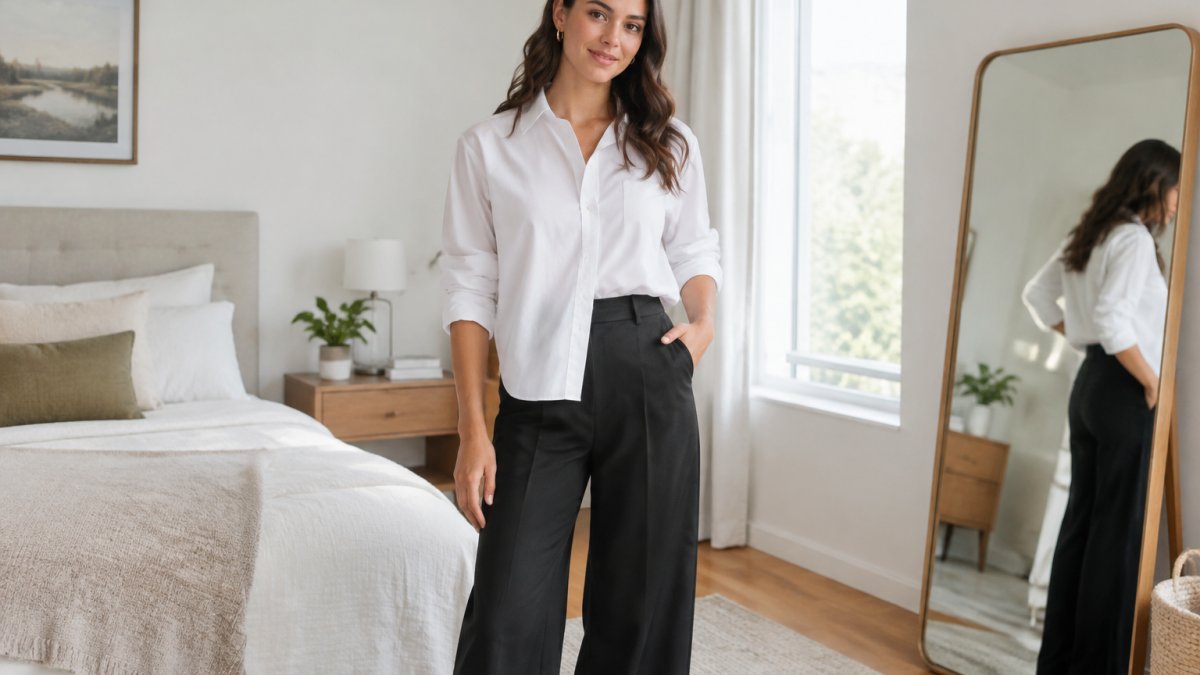
- Office: White shirt, full tuck, black wide-leg trousers, loafers.
- Weekend: Striped linen shirt, half tuck, straight jeans, sneakers.
- Evening: Black shirt, front tie, midi skirt, statement jewelry.
- Layered: Open shirt over a fitted tee, shorts and sandals.
- Cold weather: Shirt under a trench coat with a shawl scarf.
Pairing a Shirt with Jeans, Trousers, Shorts and Skirts
- Jeans: A white shirt with blue jeans is the safest casual pairing. Add a belt to finish it.
- Trousers: Black trousers and a tucked shirt give a defined waist and a clean line.
- Shorts: A linen shirt over shorts works for warm days. Roll the sleeves.
Office-to-Casual Transitions in One Outfit
Start with a fully tucked shirt, black trousers and closed shoes for work. After hours, untuck the front, roll the sleeves and swap the shoes for sneakers. Add a crossbody bag and you're done, one outfit, two settings.
How to Style a White Button-Down Shirt in Different Ways
The white button-down shirt is the most versatile piece you can own, but versatility only pays off if you match the fabric to the setting first, then build the outfit.
- Classic office: Full tuck into navy trousers with a thin belt. Use a cotton poplin shirt with a structured collar; the stiffness holds the tuck cleanly and keeps the placket flat. Blouse the fabric slightly above the belt so it doesn't pull across the stomach.
- Relaxed weekend: Half tuck into wide-leg jeans with cuffed sleeves. A slightly roomier cotton or cotton-linen shirt works best here because the front hem tucks without bunching. Roll the cuff twice to just below the elbow so the sleeve looks intentional rather than pushed up.
- Layered: Open over a tank top with a trench coat. Choose a shirt with a soft, drapey hand so it falls in a straight vertical line instead of standing away from the body. Leave the collar points buttoned down so they stay neat under the coat.
A common pattern is treating every white shirt the same. Check the fabric label before you style: poplin for structure, linen for heat, blends for low-maintenance travel.
Keep the shirt crisp and pressed; a wrinkled white shirt looks tired, not relaxed.
Fabric, Fit and Care Advice for Shirts That Last
Fabric decides how a shirt drapes, wrinkles and wears over time, and it also decides which styling tricks will hold.
How common shirt fabrics behave when styled
- Cotton poplin: Crisp and structured. It holds a full tuck and a front tie sharply, keeps a collar standing, and cuffs cleanly. It creases at the elbow and waist after a long day, so steam it before office wear.
- Linen: Breathable and textured but slippery and quick to crease. A half tuck can work loose, and a front tie may slip; knot linen more tightly or choose a cross tuck. Embrace the creasing as part of the look rather than fighting it.
- Cotton-linen blends: A middle ground. They drape more softly than poplin, crease less than pure linen, and hold a tuck reasonably well, which makes them a practical choice for travel and weekends.
A fit checklist before you buy
Fit matters as much as fabric. Run through these checks in the fitting room or against the size chart:
- Shoulders: The shoulder seam should sit at the edge of your shoulder, not past it. This is the hardest alteration to fix, so get it right first.
- Sleeves: The cuff should end at your wrist bone. If you plan to roll sleeves often, a slightly longer sleeve gives you more to work with.
- Length: A shirt that ends near your hip bone tucks cleanly; a long shirt bunches in low-rise bottoms. For front ties, check that the hem corners reach your waist.
If you're between sizes, size up and use a tuck to shape the waist. Our affordable work clothes for women guide shows how to stretch a smaller budget across more outfits, and learning how to avoid low quality fast fashion fabrics helps you spot shirts that survive more than a few washes.
Care that keeps collars and cuffs neat
- Wash in cold water and skip the dryer when you can; heat sets wrinkles and shrinks cotton.
- Hang shirts immediately after washing to reduce wrinkles, and steam rather than iron collars and cuffs to keep them sharp without flattening the fabric.
- Store on hangers, not folded in a drawer, so the collar and placket keep their shape.
Here is how the main shirt fabrics behave when you style them.
| Fabric | Behaviour when styled | Note |
|---|---|---|
| Cotton poplin | Crisp and structured; holds full tuck and front tie sharply | Creases at elbow and waist; steam before office wear |
| Linen | Breathable and textured but slippery and quick to crease | Half tuck can work loose; knot more tightly or cross tuck |
| Cotton-linen blends | Drape more softly than poplin, crease less than pure linen | Holds a tuck reasonably well; practical for travel and weekends |
| Drapey fabrics (viscose, rayon, soft blends) | Fall in a straight line and skim the body | Show tuck lines and can cling; avoid over-tucking |
| Stretch cotton | Easier to move in, less prone to pulling at buttons | Can lose shape over time; size for the shoulders |
Build Your Shirt Outfit with H&H Goods
A button-down shirt earns its place because it does so much with so little. Learn the tucks, master the sleeves, and match the fabric to the occasion.
H&H Goods stocks trendy, affordable shirts and accessories that fit real budgets. Our pieces are chosen with quality and flair in mind, so you can update your wardrobe with confidence. Fast shipping and easy 30-day returns mean you can shop with peace of mind.
View Collection
Frequently Asked Questions
Should you tuck in a button-down shirt?
Tucking depends on the look you want and the shirt's length. A full tuck into high-waisted trousers or a skirt creates a defined waist and reads more polished for office wear. The half tuck, where you tuck only the front section, works well with oversized or boyfriend-fit shirts because it adds shape without pulling at the fabric. Leave the shirt untucked when it hits at the hip and the fit is relaxed, which suits casual weekend outfits with jeans or shorts.
How do you wear an oversized button-down shirt without looking boxy?
Balance the volume with a fitted bottom half, such as slim jeans, a pencil skirt or tailored shorts. Use a half tuck or front tuck to bring the waist in, roll the cuffs to the elbow so the sleeves do not swallow your hands, and leave the top two buttons open to create a V shape at the neckline. Adding a belt or a thin scarf gives the eye a focal point. The goal is one loose piece paired with one structured piece, not volume on volume.
What can you wear with a button-down shirt besides jeans?
Wide-leg trousers and black tailored trousers make a button-down shirt look office-ready. Pair a linen or striped shirt with shorts for warm weekends, or knot the hem over a midi skirt for a softer look. Layering helps too: a trench coat over an untucked shirt and straight-leg trousers works for transitional weather, and a shawl scarf or statement jewelry changes the outfit without a full change of clothes. Cuffed sleeves and a front tie are quick ways to shift the same shirt between settings.
How do you make a button-down shirt look more casual?
Roll or cuff the sleeves, undo the top two buttons, and swap the full tuck for a half tuck or leave it untucked entirely. Pair it with jeans, shorts or a skirt instead of tailored trousers, and add playful shoes or a crossbody bag. Choosing a softer fabric like linen or a striped or oversized fit also reads more relaxed than a stiff, fitted white shirt. A front tie at the waist is another simple styling trick that turns a formal shirt into a weekend piece.
Ready to upgrade your everyday look? Start with one well-fitted button-down and build from there. Browse the H&H Goods collection to find shirts that ship fast, arrive ready to wear, and come with easy 30-day returns.
